carvato
Open car transport
Open car transport, the way most vehicles ship.
About nine of every ten cars ship on open carriers — daily drivers, dealer deliveries, and everything in between. It's the safe, standard, most affordable way to move a vehicle across the lower 48. A specialist confirms your locked, all-in price and assigns a vetted carrier.
Licensed & Bonded
Carrier-backed network
USDOT #3314113
MC-1053256
Get a Quote
✓ No obligation
✓ No spam — one specialist
The basics
The standard way to ship a car — not the "cheap" one.
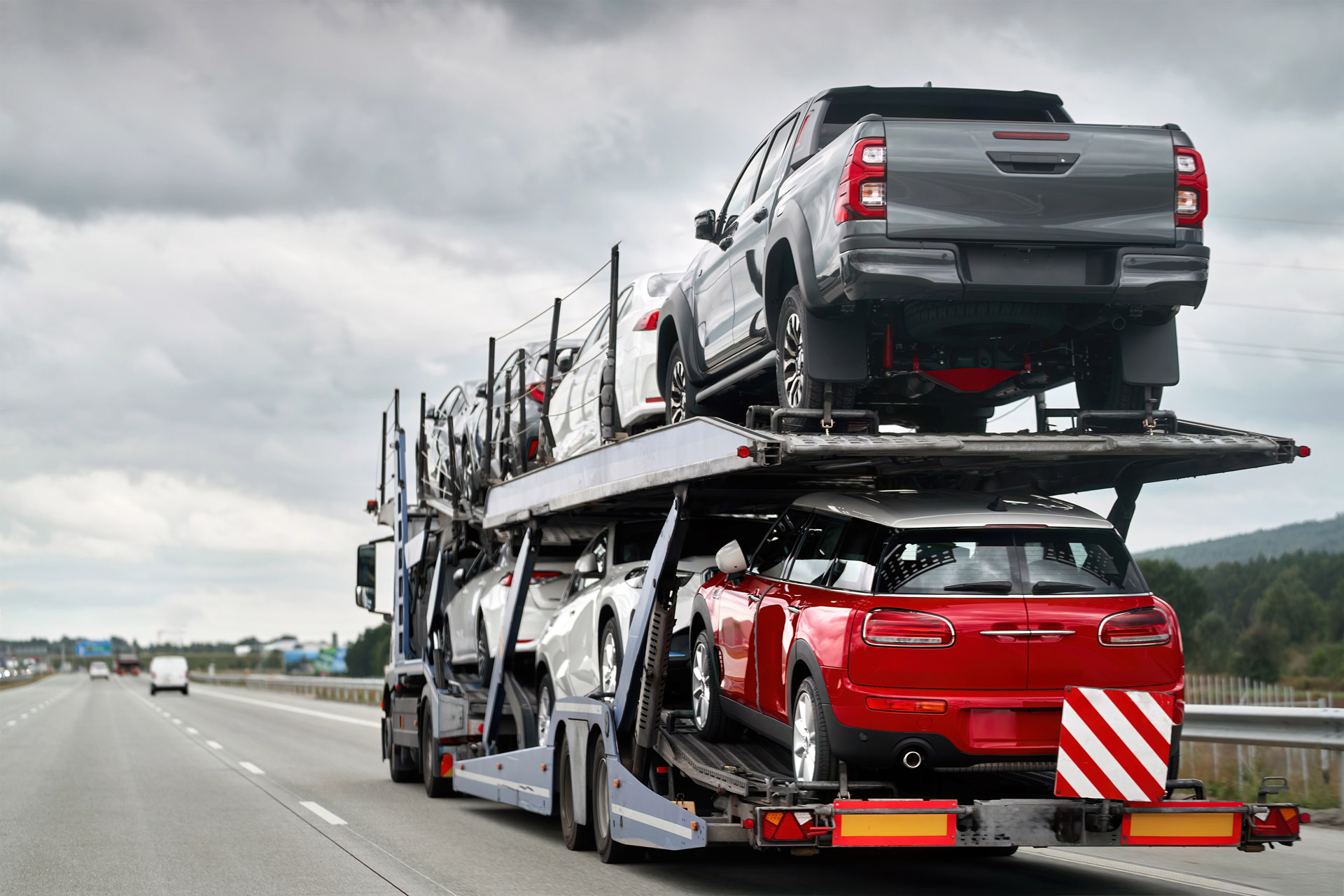
Open car transport carries your vehicle on a multi-level open trailer alongside seven to ten others. It's the same method dealerships use to move new cars from the factory to the lot. Roughly 90% of vehicles in the country ship this way, because for everyday cars it's safe, reliable, and the most cost-effective option on the road.
Your car rides exposed to the weather, the same way it would if you drove it yourself — for a fraction of the time. Cosmetic issues are rare, and every carrier we assign is vetted and insured before it touches your vehicle.
Daily drivers — sedans, SUVs, trucks, and motorcycles
Vehicles roughly under $70,000 in value
Anyone who wants the most affordable, widely available option
Standard road exposure is acceptable for the vehicle
Open vs enclosed
A 30-second way to know which you need.
Most vehicles ship open. Enclosed is for cars whose value or build justifies full protection. Here's the quick read:
Choose open transport if
It's a daily driver — sedan, SUV, truck, or motorcycle
Market value is roughly under $70,000
You want the most affordable, widely available option
Open carrier
7–10 vehicles · widely availableConsider enclosed transport if
The vehicle is worth more than $70,000
It's classic, vintage, exotic, custom, or low-clearance
It has rare paint, sentimental value, or show-quality finish

Enclosed carrier
2–6 vehicles · full protection| Factor | Open transport | Enclosed transport |
|---|---|---|
| Weather protection | Exposed to the road | Fully enclosed |
| Vehicles per trailer | 7–10 | 2–6 |
| Carrier availability | High | More limited |
| Relative cost | Most affordable | Higher |
| Best for | Daily drivers, dealer shipments | Luxury, classic, exotic, low-clearance |
The process
Three steps, and a real person on every one.
Same honest process as every Carvato shipment: a specialist prices the move, owns it, and stays reachable until your car is in your driveway.
Get your quote and lock the price
Tell us the route and vehicle. A specialist confirms a real, all-in price and locks it at booking — no automated number that climbs once you're committed.We assign a vetted open carrier
Your car is matched to an open carrier through Central Dispatch. Before anyone is assigned, we check active operating authority, insurance, and safety record.Door-to-door delivery
The carrier picks up as close to your door as legal access allows and delivers anywhere in the lower 48. The price on delivery is the price you lockedWhat it costs
A real sense of price before you commit.
Open transport on common routes. These are honest ballpark ranges — your locked price depends on distance, vehicle, season, and timing. Get your exact, locked number from the quote.
California ➞ Texas
$900–$1,200
~3–5 days · estimateFlorida ➞ New York
$700–$1,000
~2–4 days · estimateIllinois ➞ Arizona
$850–$1,150
~3–5 days · estimateWashington ➞ Florida
$1,200–$1,600
~5–7 days · estimateWhat changes your price
Distance — longer routes cost more in total, but less per mile.
Vehicle size and weight — SUVs and trucks take more space than sedans.
Pickup and delivery location — metro areas have more carriers and better rates than rural ones.
Season — peak demand periods can run higher.
Vehicle condition — an inoperable car needs winch loading, which costs more.
Lead time — booking a few days ahead usually beats a next-day request.

How we vet carriers
Every carrier is checked before it touches your car.
Carvato is the auto-transport arm of an established, licensed and bonded transport company, so vetting isn't a box we tick. Before an open carrier is assigned to your shipment, we confirm three things:
Established-company backed
Backed by an established, licensed and bonded company — a real operation behind the booking, not a hollow reseller.Licensed & bonded
FMCSA authority on file and public — look us up before you book.Vetted carriers
Active authority, insurance, and safety record, verified before dispatch.Want to vet us the same way we vet our carriers? Our own FMCSA authority is public — look us up before you book. We'd rather you did:
MC-1053256
USDOT #3314113
Straight talk
When we'd tell you to choose enclosed instead.
Open Car Transport
The affordable, most-used way to move a vehicle. Sedans, SUVs, trucks, and daily drivers ship safely on open multi-car carriers across the lower 48.Shipping something high-value? See Enclosed Car Transport
Open transport questions
Quick answers.
Get a Quote
Ready to price your open transport?
Get a real, locked price from a real specialist. No obligation.
Get a Quote
Call (224) 506-3676